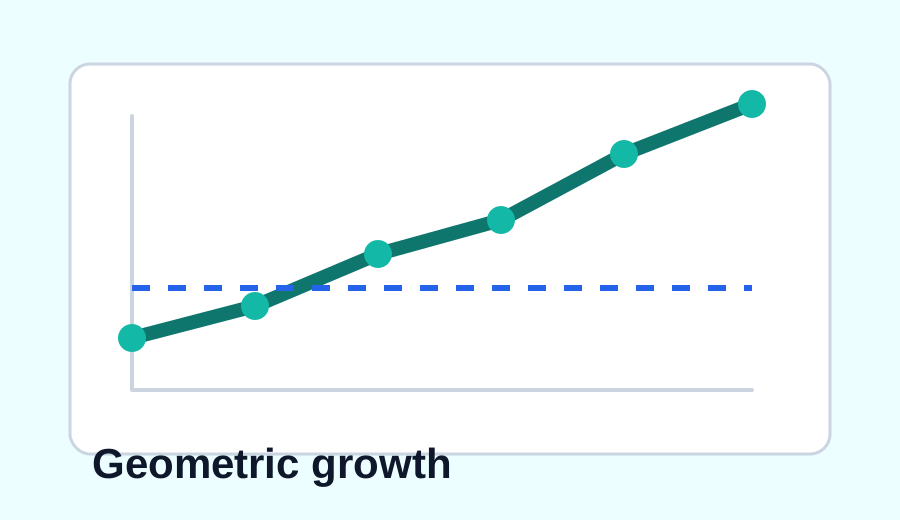
How to Use Geometric Mean for Growth Rates
Convert growth percentages into factors, take the nth root, and read the average compound growth rate — with a full worked example and the checks to run.
Read guide Geometric Mean Calculator
 Guides
Practical guides for applying geometric mean to investment returns, population growth, index normalization, speed averaging, and statistical summaries — each with numeric worked examples, formula proofs, and common-mistake corrections.
Showing 1-12 of 13 guides
Convert growth percentages into factors, take the nth root, and read the average compound growth rate — with a full worked example and the checks to run.
Read guide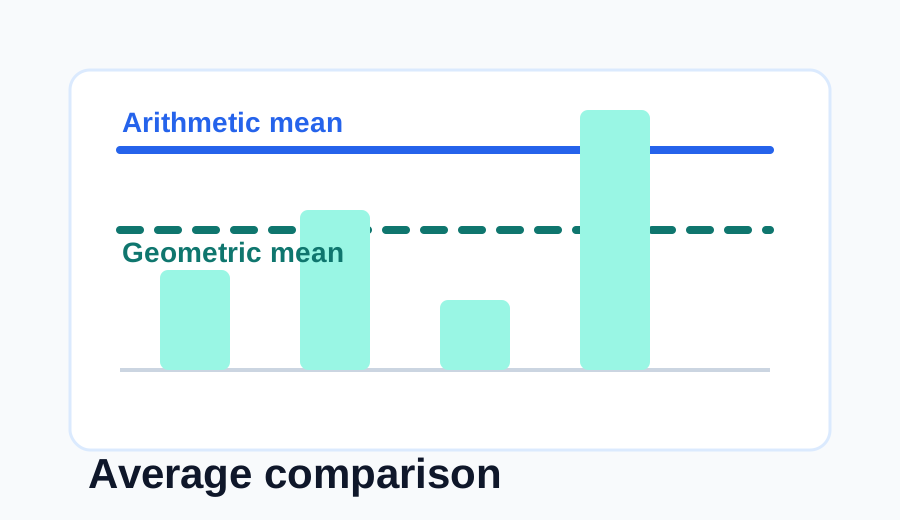
Arithmetic mean adds, geometric mean multiplies. See both worked on the same scores and the same investment returns, and learn which one your data needs.
Read guide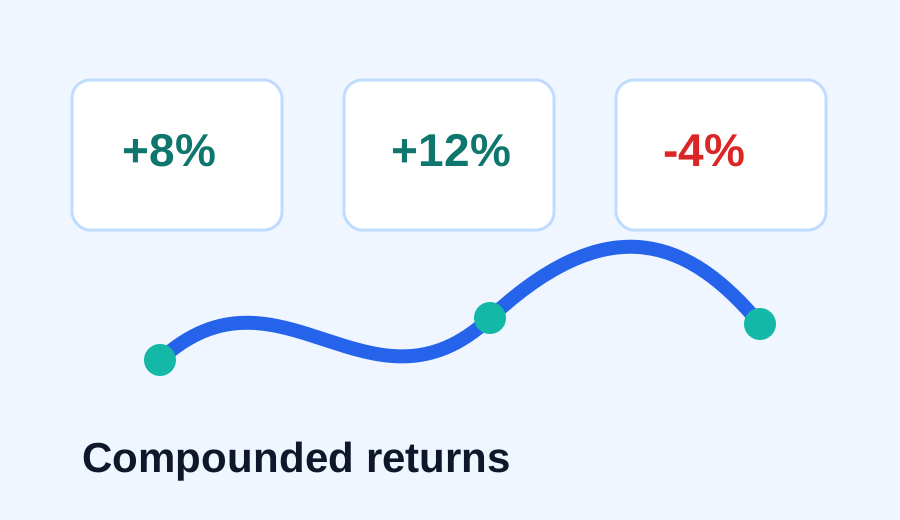
Learn the geometric mean return formula, work through a five-year annual return example, annualize monthly or quarterly results, and see the -100% limit.
Read guide Ratios are scale-relative, so one large value can dominate an arithmetic average. Geometric mean keeps ratio comparisons balanced — with worked examples.
Read guide Index values measure relative change, so they multiply rather than add. See how geometric mean keeps a rebased index honest across periods and categories.
Read guide Percentages must become growth factors before averaging: 8% is 1.08, -10% is 0.90. See the conversion, the geometric mean, and how to read the result back.
Read guide Both resist outliers, but they answer different questions. Geometric mean preserves the product; median finds the middle. See when each is the honest summary.
Read guide Normalized scores are ratios, so averaging them additively rewards outliers. Use geometric mean to combine indexed metrics without one dimension dominating.
Read guide Geometric mean in practice across the sciences: bacterial concentrations, dilution series, fold changes, and titre data, with the reasoning behind each case.
Read guide A student-friendly guide to geometric mean: the formula, why 4 and 16 average to 8, the geometry link, practice questions, and the mistakes to watch for.
Read guide Seven geometric mean mistakes that produce plausible but wrong answers — raw percentages, stray zeros, additive data — each with the fix and a worked check.
Read guide Averaging logarithms then exponentiating gives the same geometric mean without overflow. See when the log method matters and how to apply it to weighted data.
Read guide